
In the new energy vehicle battery pack system, the explosion-proof valve (also known as the waterproof, explosion-proof and breathable valve) is not a simple seal, but a strictly controlled "safety release channel".
Under normal operating conditions, it needs to maintain stable breathability to balance the pressure difference between the inside and outside of the battery pack and reduce hidden dangers such as fogging and condensation. Under abnormal operating conditions, it must quickly release pressure in a very short time to avoid the risk of casing rupture or even thermal runaway.
Once the pressure is restored, the explosion-proof valve must be reliably closed to block the intrusion of water vapor, dust and other external factors.This also means:
Any "misjudgment" of the explosion-proof valve may be magnified into a safety risk at the entire package or even vehicle level.
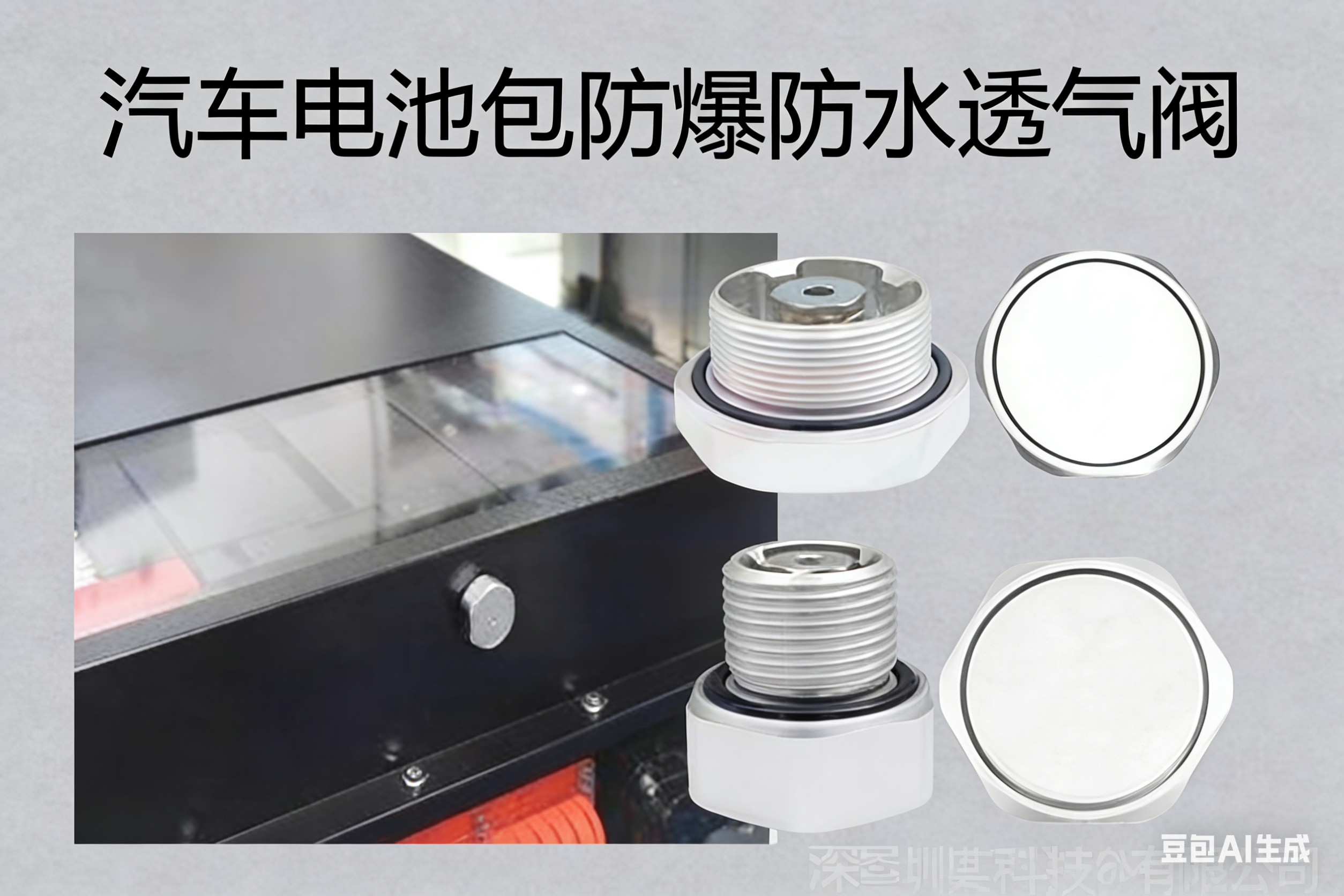
? New energy vehicle battery pack explosion-proof valve
The core difficulty of explosion-proof valve seal detection is different from traditional seals. The explosion-proof valve itself is a "breathable" structure.
Therefore, the core of detection does not lie in "whether there is a leak", but in:
How to distinguish normal ventilation from abnormal leakage?
How to establish a stable and mass-produced consistency determination standard?
How to avoid yield disputes, re-inspection and rework or even customer claims due to fluctuations in judgment?
This is the industry problem that explosion-proof valve testing has long faced.
Hirays core solutions
Focusing on the dual attributes of "breathable and protective" explosion-proof valves, Haris has built a complete testing solution from judgment logic to production line implementation. The core goal is only one: to make every "breath" of the explosion-proof valve within a controllable, safe, and traceable range.
Explosion-proof valve: core performance testingThe detection of explosion-proof valves needs to ensure the two functions of "breathing" and "protection" at the same time. The key lies in the following two core performances:
1. Air permeability test
Under the set pressure difference, the Hirays HC flow-type air-tightness detector can be used to measure the gas throughput to determine whether it is within the design range.Ensure that the explosion-proof valve can discharge gas smoothly under working conditions such as temperature rise and altitude changes, and prevent shell bulging or sealing failure.
2. Start the stress test
The Hirays HC flow-type air tightness detector is used to gradually pressurize, accurately record the opening and reset pressure, and monitor leakage at the same time to ensure that the performance meets the design requirements.It ensures that when the internal pressure rises abnormally, the valve can quickly open to relieve pressure according to the preset pressure, and reliably close after the pressure drops to prevent the intrusion of external pollutants.
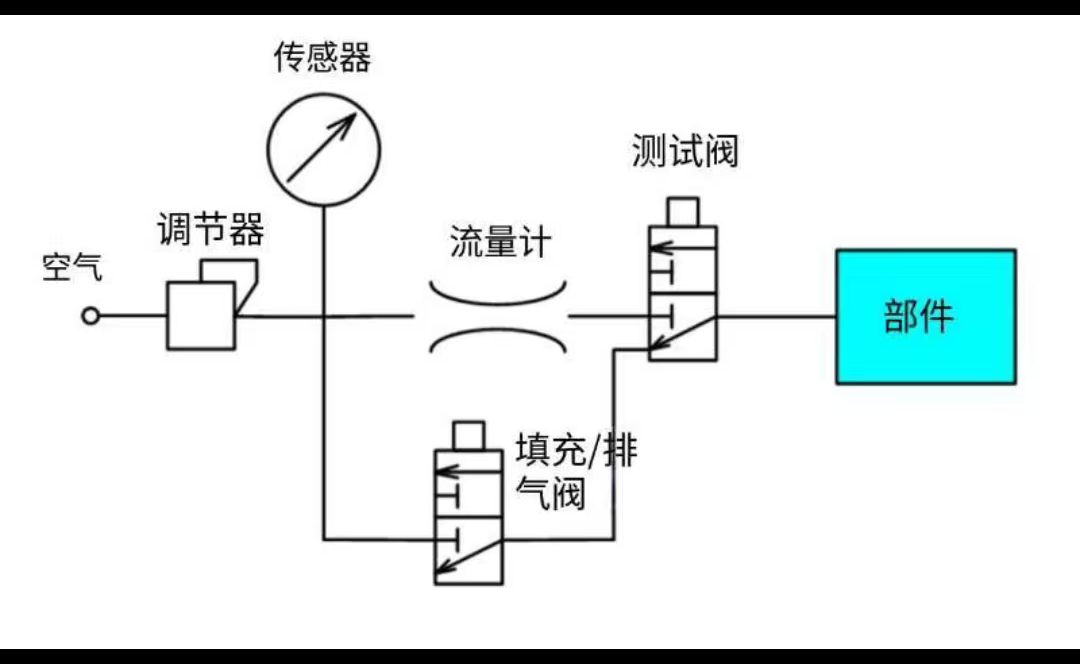
? Flow type detector schematic diagram
Breathable valve: taking into account both "breathing" and "waterproofing"The breathable valve (breathing valve) also needs to balance the internal and external pressure difference and be waterproof and dustproof. The key points of its inspection are as follows: 1. Air permeability test To measure the air permeability under the standard pressure difference to ensure smooth "breathing" and avoid shell deformation or seal damage due to insufficient flow, you can choose the Hirays HC flow-type air tightness detector. 2. Real water test Through the HW true water detector, severe working conditions such as heavy rain and high-pressure water cannons are simulated to verify whether the waterproof performance meets the standards and ensure "breathability and no water leakage".The main test method is to apply precisely controlled water pressure to one side of the membrane and hold it steady for several seconds.The instrument monitors the pressure attenuation value in the cavity in real time. If it exceeds the set threshold, the waterproofness is determined to be unqualified.
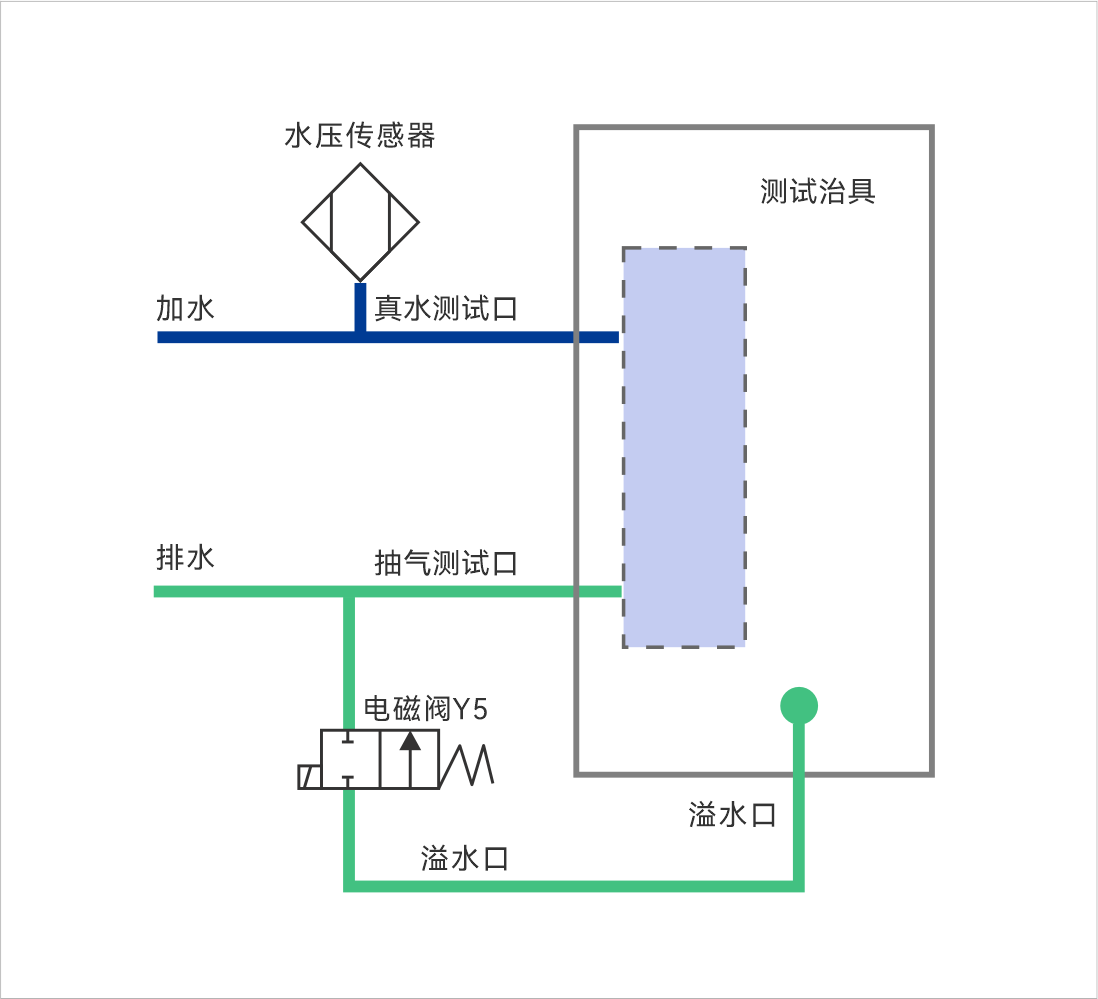
?HW true water detector schematic diagramCore advantages of Hirays Instruments
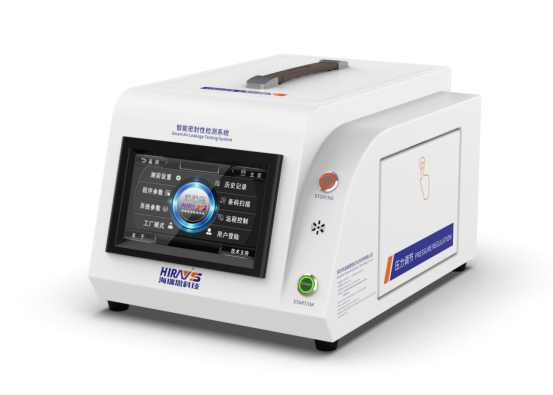
HC flow type air tightness detector
The judgment is more intuitive: directly based on the air permeability/leakage rate to avoid the instability problem of the pressure drop method in small volumes and complex structures.
Not affected by the workpiece: insensitive to changes in workpiece shape and internal volume, resulting in higher consistency of judgment
Production line friendly: The test rhythm is stable, supports automated integration and data storage analysis, and is suitable for large-volume online testing
High sensitivity: High-precision flow sensor with a resolution of up to 0.1 mL/min, which can stably capture small flow changes
Flexible parameters: test pressure, test time, and judgment interval can be freely configured to adapt to different membrane materials and design requirements
Wide coverage: measuring range 0~100 L, supports IPX5 / IPX6 and other waterproof grade products
HW true water detector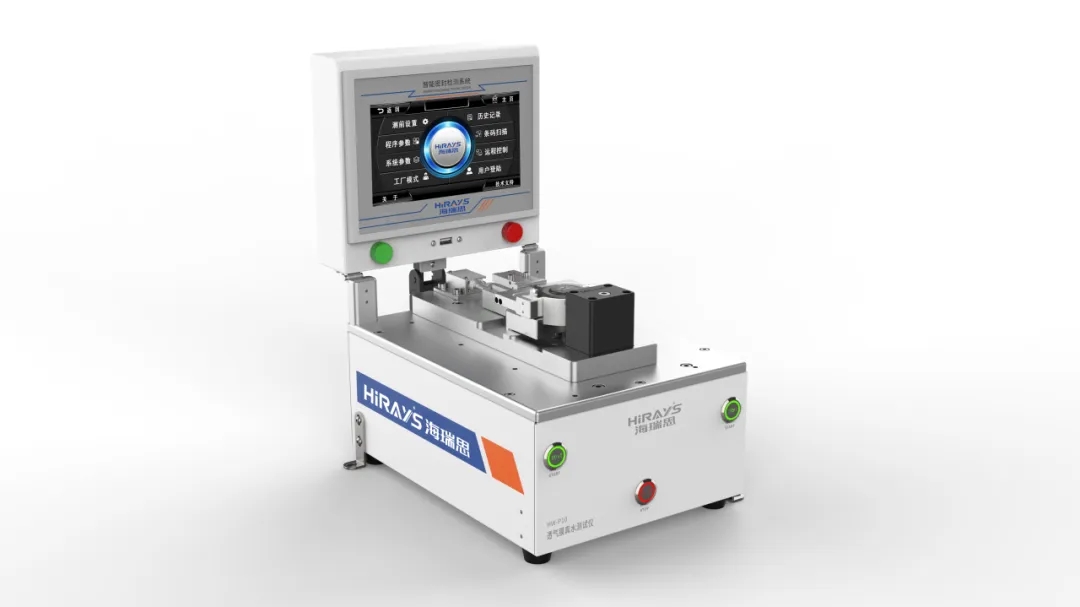
Excellent performance: integrated, multi-channel design, small size, high precision
Automatic judgment: automatically identify defective products and alarm, reducing manual intervention
Easy to integrate: supports Modbus communication, easy to access PLC and MES systems to achieve automated production
Wide range of applications: It has been maturely used in new energy battery packs and 3C products such as mobile phones, watches, AR glasses, Bluetooth headsets, etc., and has served more than 1,000 production lines in total. Haris: Make every "breath" safe and reliable
The air tightness testing of explosion-proof valves/ventilation valves is not a question of "can it leak?" but a question of "how much leakage, when leakage occurs, and whether it is always controlled." It is also a systematic project directly related to battery safety, lifespan, and responsibility. Choosing an appropriate testing solution is essentially establishing a bottom line for the long-term safety, quality consistency, and liability traceability of the battery system.
Hai Ruisi allows the "breathing" of every explosion-proof valve to have standards, boundaries, and guarantees.Provide truly practical testing support for the quality and safety of new energy batteries and protect the brand reputation of manufacturers! *Some pictures come from the Internet and have been deleted due to infringement.
-
2026.04.11Good News | Hirays Honored as "Most Investment-Worthy Enterprise" at 2026 AI Glasses China Tour
-
2026.04.11Why are more and more companies opting for RGA technology for power bank electrolyte leakage detection?
-
2026.03.30Commemorating the revolutionary martyrs and inheriting the red spirit | Record of hirays’s theme activity of walking to commemorate the martyrs’ cemetery
-
2026.03.20Starting from June, the sale of non-compliant power banks will be banned: many companies ignore this detection issue
-
2026.03.16After charging 70% in 5 minutes, how can the safety of the power battery be maintained?
-
2026.03.14Overcoming difficulties and showing responsibility, efficient delivery wins praise - a tribute to the four pioneer employees on the production front line
-
2026.03.03Comparison of mass spectrometry technology applications: How do Heris helium mass spectrometers and RGA series enable precision manufacturing?
-
2026.02.26Construction has started | hirays starts a new journey of struggle in 2026
-
2026.02.06Let’s work together to embark on a new journey | The 3rd hirays Fun Games was successfully held
