
Is it difficult to choose sealing testing equipment?5 tips to get it done quickly!
In the process of industrial manufacturing and product development, the application of sealing testing equipment has become increasingly important.If you’re confused about choosing the right seal testing equipment, don’t worry!Today, Hirays will provide you with five tips to help you quickly solve this problem.Through this article, you will learn how to choose the most suitable equipment according to different needs to make your work more efficient, accurate and reliable.
1. Understand needs and clarify goals
The first task is to understand your specific needs and inspection goals.Do you want to test air tightness or liquid tightness?Or do you want to test the sealing performance under certain specific environments?For different needs, the selection of equipment also varies.Clarify your testing purpose and understand the testing conditions, such as temperature, pressure, and medium. This information will help you select equipment more specifically.Likewise, be aware of the shape, size, and material of the object being inspected.These characteristics will directly affect the selection of equipment.If you need to perform high-precision detection in a complex environment, you need to choose more specialized equipment.
2. Choose the right type of technology
Common sealing detection technologies currently on the market include vacuum method, positive pressure method, negative pressure method, helium leak detection method, etc.Vacuum method and positive pressure method are commonly used and suitable for most sealing testing needs.Helium leak detection rules are suitable for occasions with high accuracy requirements.Understanding these different inspection technology types and choosing the technology that best suits your production environment and inspection needs will greatly improve the accuracy and efficiency of inspection.For example, if you are engaged in the automobile manufacturing industry, the helium leak detection method may be more in line with your high standards for small leak detection.
3. Pay attention to the brand and after-sales service
Brand and after-sales service are factors that must be considered when choosing sealing testing equipment.As a well-known brand in the industry, Hiraysi provides high-quality sealing testing equipment and complete after-sales services, making it your trustworthy choice.The quality and durability of equipment are directly related to production efficiency and product quality.Efficient after-sales service can provide timely technical support and repairs when equipment fails, ensuring that your production is not affected.Therefore, choosing a reputable brand and efficient after-sales service will save you a lot of worries.
4. Examine the technical parameters and operational convenience of the equipment
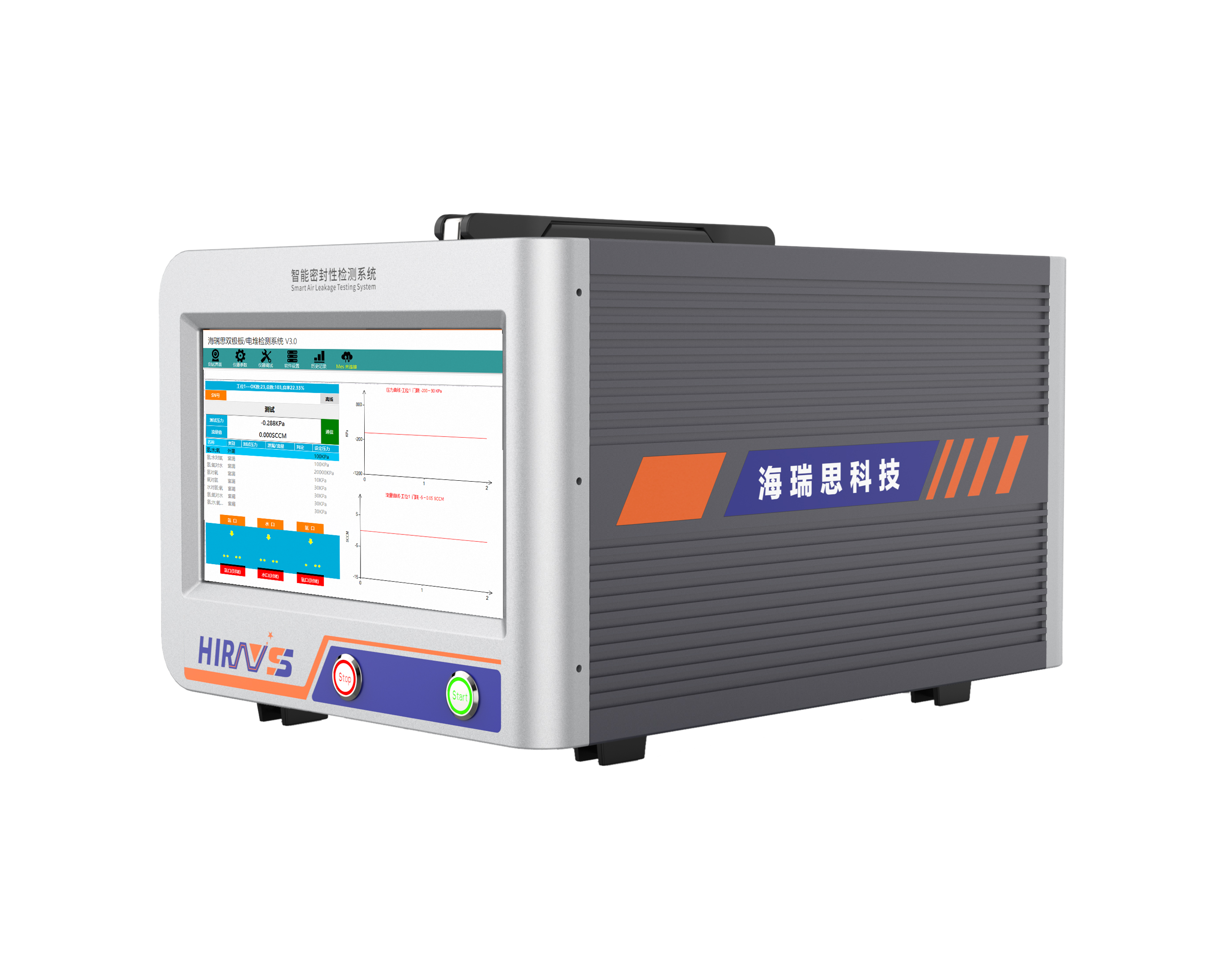
The technical parameters of the equipment directly determine its scope of application and detection accuracy.When selecting, you should carefully read the parameter description to ensure that all indicators of the equipment meet your needs.Ease of operation is also a very important consideration.Complex operating procedures may increase learning and training costs, and may even lead to operational errors, thus affecting detection results.Choosing equipment that is simple to operate and easy to use can greatly improve work efficiency.If possible, experience the operation of the equipment in person to see for yourself whether the equipment meets your expectations.
5. Consider the cost-effectiveness of the equipment
When choosing tightness testing equipment, budget is an unavoidable issue.Expensive equipment may not be the best choice, and cheap equipment may also have hidden quality problems.Therefore, the cost-effectiveness should be considered comprehensively when selecting equipment.Analyze the service life, maintenance costs, consumable costs and other factors of the equipment to evaluate the economics of its long-term use.Through multiple comparisons, choosing a device that can not only meet your needs but also control costs will bring a higher return on investment to your business.
6. Obtain more information through actual cases and user feedback
Actual cases and user feedback are important references for evaluating device performance.By understanding other users' experience and actual cases, you can more intuitively understand how the device performs in actual applications.Looking up relevant customer reviews and success stories online, or communicating directly with companies that have used it, can help you understand the equipment more comprehensively.Hirays not only provides a wealth of case studies on its official website, but also provides a customer service hotline to answer your questions at any time, so that you can make a more informed choice.
in conclusion
After reading this article, I believe you have mastered 5 tips for choosing sealing testing equipment: understand the needs and goals, choose the appropriate technology type, pay attention to the brand and after-sales service, examine the technical parameters and ease of operation of the equipment, consider the cost-effectiveness of the equipment, and obtain more information through actual cases and user feedback.Follow these five tips and you will be more comfortable choosing seal testing equipment.I hope this article can help you in your work, so that you will no longer be confused when choosing sealing testing equipment and quickly find the solution that best suits you.Hiraysi looks forward to becoming your best partner on the road to sealing testing!
-
2026.04.11Good News | Hirays Honored as "Most Investment-Worthy Enterprise" at 2026 AI Glasses China Tour
-
2026.04.11Why are more and more companies opting for RGA technology for power bank electrolyte leakage detection?
-
2026.03.30Commemorating the revolutionary martyrs and inheriting the red spirit | Record of hirays’s theme activity of walking to commemorate the martyrs’ cemetery
-
2026.03.20Starting from June, the sale of non-compliant power banks will be banned: many companies ignore this detection issue
-
2026.03.16After charging 70% in 5 minutes, how can the safety of the power battery be maintained?
-
2026.03.14Overcoming difficulties and showing responsibility, efficient delivery wins praise - a tribute to the four pioneer employees on the production front line
-
2026.03.03Comparison of mass spectrometry technology applications: How do Heris helium mass spectrometers and RGA series enable precision manufacturing?
-
2026.02.26Construction has started | hirays starts a new journey of struggle in 2026
-
2026.02.06Let’s work together to embark on a new journey | The 3rd hirays Fun Games was successfully held
