
What should I do if there are problems during the sealing test in Shenzhen?Expert answers
In Shenzhen, a city with cutting-edge technology and rapid changes, the importance of sealing testing cannot be ignored.From electronic products to auto parts, every product needs to undergo strict testing before leaving the factory.This process is not always smooth sailing, and problems will inevitably arise.Testing instrument failure, operating errors or environmental influences may cause test results to deviate from expectations.So, what should we do when problems arise during the sealing testing process in Shenzhen?Don’t worry, the experts from Haireisi will answer all your questions.
1. Determine the source of the problem
The most critical step is to determine the source of the problem.Is it a problem with the testing equipment, or is there something wrong with the sample itself?Or did the operator make a mistake during the inspection process?This step is like looking for clues in a case and requires meticulous attention to detail.Often a good choice is to use the process of elimination.First confirm whether the equipment is operating normally. If everything is fine, then the problem may lie in the sample or the operation process.
2. Troubleshoot equipment faults
When it is suspected that there may be a problem with the equipment, technicians need to conduct a comprehensive investigation.First, you need to check whether the power supply, wiring, etc. are normal and whether they are loose or short-circuited.Next, check key components such as sensors and pressure valves to ensure they are functioning properly.If the device supports the self-test function, be sure to perform the self-test and review historical data records and error logs, which will help identify potential problems.If necessary, replace damaged parts to ensure that equipment performance returns to normal.
3. Recalibrate the equipment
Even the most advanced equipment requires regular calibration to ensure its accuracy.If the equipment is not calibrated for a long time, the test results will be biased.Therefore, recalibrating the device is an important step in troubleshooting the problem.During the calibration process, standard samples can be used for comparison to observe the accuracy and consistency of the detection values.If deviations are found, corrections are made through adjustment and calibration procedures until the equipment is restored to optimal condition.After calibration is complete, it is a good idea to conduct another verification to ensure that the equipment is fully qualified.
4. Check the operation process
No matter how good the equipment is, it needs to be supported by correct operating procedures, otherwise it will only be "a skillful woman cannot make a meal without straw".Operators need to strictly follow the standardized procedures to ensure that every detail does not go wrong.From preparation before testing, to data reading and final recording, everything needs to be meticulous.Training operators is a good method, and their proficiency can also be improved through simulated inspections.If there is an operation manual, it is recommended to review and update it regularly to adapt to new technologies or new requirements.
5. Problems with analyzing samples
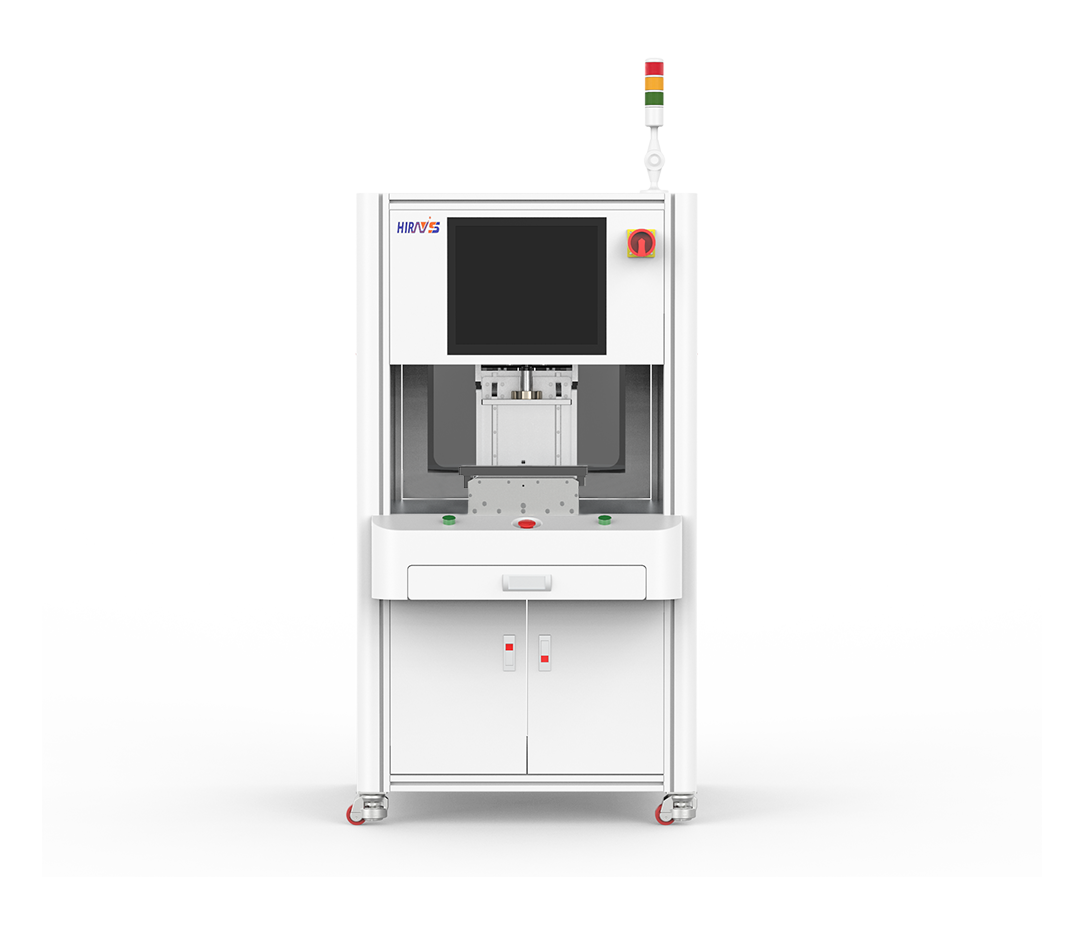
If there is no problem with the equipment and operation, is there something wrong with the sample itself?At this point, it’s time to examine the sample carefully.Does the sample have obvious physical defects?Is it affected by environmental factors such as external dirt, humidity or temperature?If necessary, new samples can be prepared or the storage conditions of the samples can be adjusted to obtain more accurate detection results.In special cases, additional sample pre-treatment, such as drying or cleaning, may be required to ensure that all testing standards are consistent.
6. Influence of environmental factors
Environmental factors also play a role that cannot be ignored in sealing testing.For example, temperature, humidity, air pressure, etc. will affect the accuracy of detection.Therefore, when conducting testing, the environmental conditions should be ensured to be stable and controllable.Equipment such as air conditioning systems, dehumidifiers, and air pressure regulators can help maintain a suitable environment.At the same time, it is recommended to record and monitor environmental parameters before testing. If necessary, adjust the laboratory environment to ensure that it does not interfere with the testing data.
7. Data analysis and recording
Data analysis is also crucial.When bias is suspected in test results, data analysis through statistical methods can help pinpoint the problem.Chart your data to identify outliers and trends.At the same time, the parameters and results of each test are recorded in detail and a complete database is established.In this way, when a problem occurs, you can quickly find historical records and compare data to locate the problem and improve the process.Regularly review and analyze data to discover possible patterns and patterns to prevent similar problems from happening again.
8. Seek professional help
When all self-help methods fail to solve the problem, don’t hesitate to seek professional help.Contact the equipment manufacturer or professional testing laboratory for technical support and services.The expert team can dispatch professional technicians to the site to inspect and repair equipment, or provide detailed operating guidance and training.You can also participate in relevant technical exchange meetings and training courses to continuously improve your professional knowledge and skills to better cope with future testing challenges.
in conclusion
Although there are endless problems in sealing testing, they can all be solved as long as scientific methods and effective measures are adopted.From determining the source of the problem, to troubleshooting equipment failures, to analyzing samples and environmental factors, every step is important to ensure accurate test results.I hope this article provides you with practical solutions and a little fun while reading.Whether you are a technical expert or a beginner, I believe you can learn some new knowledge and insights from it.
-
2026.04.11Good News | Hirays Honored as "Most Investment-Worthy Enterprise" at 2026 AI Glasses China Tour
-
2026.04.11Why are more and more companies opting for RGA technology for power bank electrolyte leakage detection?
-
2026.03.30Commemorating the revolutionary martyrs and inheriting the red spirit | Record of hirays’s theme activity of walking to commemorate the martyrs’ cemetery
-
2026.03.20Starting from June, the sale of non-compliant power banks will be banned: many companies ignore this detection issue
-
2026.03.16After charging 70% in 5 minutes, how can the safety of the power battery be maintained?
-
2026.03.14Overcoming difficulties and showing responsibility, efficient delivery wins praise - a tribute to the four pioneer employees on the production front line
-
2026.03.03Comparison of mass spectrometry technology applications: How do Heris helium mass spectrometers and RGA series enable precision manufacturing?
-
2026.02.26Construction has started | hirays starts a new journey of struggle in 2026
-
2026.02.06Let’s work together to embark on a new journey | The 3rd hirays Fun Games was successfully held
