
What is a seal test?Key knowledge points you need to know
Seal testing is a vital technology in modern manufacturing and quality control processes.Whether it is electronic equipment, medical equipment or automobile parts, sealing testing is directly related to the safety and reliability of the product.In order to help you better understand this technology, we at Hai Ruisi have prepared this comprehensive introduction for you, hoping to provide you with valuable information when choosing products or services.
1. What is sealing test?
Leakage testing, also known as leakage testing, is a testing technique used to evaluate whether a device or component has complete sealing performance.Its purpose is to ensure that the object under test will not leak under predetermined environmental conditions, thereby ensuring its functionality and safety.There are many methods of sealing testing. It is very important to choose the most appropriate testing method based on specific scenarios and needs.
2. Application areas of seal testing
Seal testing is widely used in multiple industries.For example, in electronics manufacturing, ensuring the sealing of components and finished products can prevent the ingress of moisture and dust, and avoid short circuits and other failures.In the field of medical devices, seal testing can ensure the sterility of equipment and avoid the risk of infection.In automotive manufacturing, seal testing ensures the safety of fuel tanks, air bags and other critical components.
3. Common sealing test methods
Nowadays, there are various methods of seal testing, including air pressure difference testing, vacuum testing, water immersion testing and helium testing.Each of these methods has advantages and disadvantages, and the specific choice needs to be determined based on product characteristics and testing requirements.For example, differential air pressure testing is suitable for testing highly wind-tight equipment, while helium testing is better suited for components requiring extremely high sensitivity.
4. Air pressure difference test
The air pressure difference test is a common sealing test method. It determines whether there is a leak by measuring the change in air pressure difference between the inside and outside of the object being tested.This method is simple to operate and has a wide range of applications. Its main advantages are fast testing speed and low cost.However, one limitation is that it is not sensitive enough to very small leaks, so it is not suitable for the detection of high-precision products.
5. Vacuum test
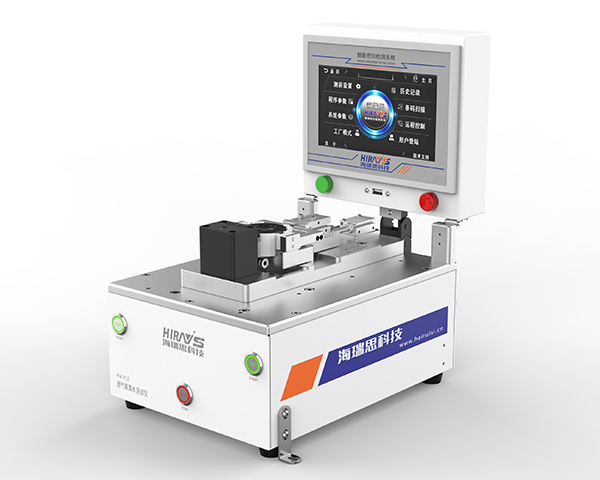
Vacuum testing is often used where highly accurate measurement of leak rates is required.In this test method, the device under test is placed in a vacuum environment, and the sealing performance is judged by measuring the change in vacuum degree.The advantage of this method is that it is highly accurate and can detect very small leak rates, but the operation is complex and the equipment cost is high, requiring specialized technical personnel to operate.
6. Water immersion test
The water immersion test is an intuitive and simple method of testing tightness.During the test, the object to be tested is immersed in water and the leakage is determined by observing whether bubbles are generated.Although this method is simple to operate, its disadvantage is that it can only detect relatively large leaks, is only applicable to some products, and is not suitable for all precision equipment with high sealing requirements.
7. Helium test
Helium testing is a high-precision sealing testing method that fills the object under test with helium and then detects its leakage modulus.Thanks to the extremely small diameter of helium molecules, this method is able to detect extremely small leaks.However, helium testing equipment is complex and expensive, and is mainly used in high-demand fields such as aerospace and precision instruments.
8. Advantages and challenges of seal testing
Sealing testing technology has greatly improved product quality and safety, but its implementation also faces many challenges.In addition to the high cost of equipment and technology, the choice of testing standards and methods is also critical.Each testing method has its limitations, which require comprehensive consideration of factors such as product characteristics, test environment, and budget.We at Hirays have rich experience and professional equipment to provide you with first-class sealing testing services to ensure that your products have a competitive advantage in the market.
in conclusion
As a key link to ensure product quality and safety, the importance of seal testing is self-evident.Whether you are an electronics manufacturer, medical device producer or automotive parts supplier, you need to take this technology seriously.We at Hirays are committed to providing the most comprehensive and professional seal testing services to help you create high-quality, high-reliability products.If you have any questions or needs about seal testing, please feel free to contact us and we will provide you with professional solutions as soon as possible.
-
2026.04.11Good News | Hirays Honored as "Most Investment-Worthy Enterprise" at 2026 AI Glasses China Tour
-
2026.04.11Why are more and more companies opting for RGA technology for power bank electrolyte leakage detection?
-
2026.03.30Commemorating the revolutionary martyrs and inheriting the red spirit | Record of hirays’s theme activity of walking to commemorate the martyrs’ cemetery
-
2026.03.20Starting from June, the sale of non-compliant power banks will be banned: many companies ignore this detection issue
-
2026.03.16After charging 70% in 5 minutes, how can the safety of the power battery be maintained?
-
2026.03.14Overcoming difficulties and showing responsibility, efficient delivery wins praise - a tribute to the four pioneer employees on the production front line
-
2026.03.03Comparison of mass spectrometry technology applications: How do Heris helium mass spectrometers and RGA series enable precision manufacturing?
-
2026.02.26Construction has started | hirays starts a new journey of struggle in 2026
-
2026.02.06Let’s work together to embark on a new journey | The 3rd hirays Fun Games was successfully held
