
Sharing tips on the maintenance and upkeep of air tightness testing equipment
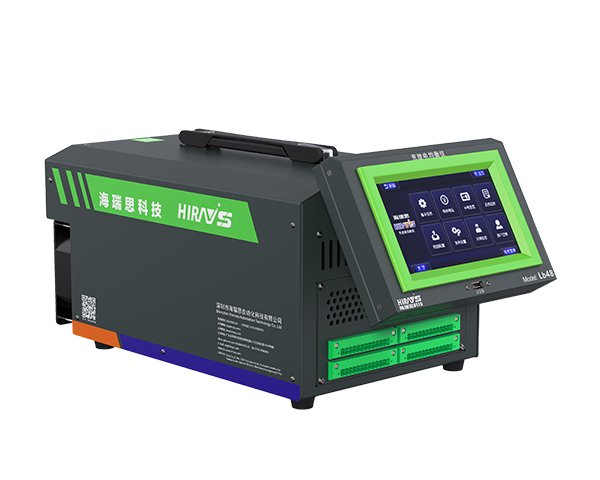
In industrial production, air tightness testing equipment is like an experienced doctor, responsible for checking and ensuring the health of products.However, have you ever encountered the trouble of sudden equipment failure and inaccurate test data?That feeling of helplessness, like a clock around you that has stopped moving, makes people anxious.In fact, the maintenance and upkeep of equipment is the secret to allowing these "doctors" to serve for a long time.In this article, we will share some practical maintenance and care tips to help you extend the service life of your air tightness testing equipment and keep it "vital".
Subtitle 1: Regular inspections to prevent the slightest change
Checking your equipment regularly is like developing a good habit of waking up early, it will give you a clear understanding of the status of your equipment.You can develop a monthly inspection list, such as checking whether the seals of the equipment are intact, whether there are leaks, whether the sensors are working properly, etc.For example, if the sealing ring is slightly damaged but not replaced in time, the consequences may lead to inaccurate testing and thus affect product quality.Just like the shoes you wear, although they may appear to be in good condition, if the soles are severely worn, you may fall down easily while walking.Therefore, regular comprehensive inspections can help you detect problems early and avoid painful losses later.
Subheading 2: Keep it clean and avoid dust accumulation
Air tightness testing equipment tends to accumulate dust and dirt during use, just like your work surface. If it is always messy, efficiency will naturally decrease.Keeping equipment clean not only improves test accuracy but also extends its service life.You can use a lint-free cloth to wipe it regularly. Pay special attention to cleaning aluminum alloy or stainless steel parts to maintain a smooth surface.Suppose you find that the data fluctuates greatly during a test. After careful inspection, it turns out that the sensor is covered with dust, which ultimately leads to unnecessary test failure.Therefore, taking the time to keep your equipment clean is a necessary step to improve your testing efficiency and accuracy.
Subtitle 3: Reasonable storage to avoid excessive impact
Air tightness testing equipment is not placed casually. Just like we cherish our mobile phones, we should avoid placing them anywhere.When transporting or storing the equipment, avoid high temperature and humid environments, as well as collisions and shocks to avoid damage to its internal structure.For example, if the device is lightly touched and the internal sensor is damaged, the consequences can be imagined. The test results will not be guaranteed, and may even lead to the rework of the entire batch of products, causing the company to face huge losses.The place where the equipment is stored should be in a dry, stable environment, away from high temperature and humidity, to ensure that it can be used as smoothly as new every time.
Subtitle 4: Timely calibration to ensure accurate testing
The accuracy of the device lies in its calibration, just like when we measure height, the markings on the wall must be accurate to avoid errors.Air tightness testing equipment needs to be calibrated regularly to ensure the reliability of each test result.It is generally recommended to perform calibration every three months. If abnormal test data is found during this period, it should be checked or recalibrated in time.For example, during the production process, you may find that the air tightness of a certain product always fails to pass the test. After careful inspection, you find that the equipment was not calibrated in time, resulting in inaccurate test results.In this way, unnecessary trouble will make people feel anxious. Therefore, regular calibration of equipment is not only maintenance, but also an important part of protecting product quality.
Summary: Key points for care and maintenance
- Regular inspection:Develop a checklist to understand the status of equipment, such as checking seals and sensors regularly.
- Keep it clean:Use a lint-free cloth to wipe the device to ensure test accuracy.
- Proper storage:Avoid high temperature and humid environments to reduce equipment impact.
- Timely calibration:Calibrate the equipment every three months to ensure reliable data.
in conclusion
Maintaining and maintaining air tightness testing equipment is like caring for an old friend.Every simple and meticulous work will lay a solid foundation for smooth operation in the future.Are you ready to protect your equipment?You may wish to recall these tips during your next inspection and remain vigilant at all times.Remember, equipment is like a car. Only with careful maintenance can it run farther and be neater.If you have other experience or questions about equipment maintenance, please leave a message in the comment area, let us share it together, and let the wisdom of the equipment continue!
-
2026.04.11Good News | Hirays Honored as "Most Investment-Worthy Enterprise" at 2026 AI Glasses China Tour
-
2026.04.11Why are more and more companies opting for RGA technology for power bank electrolyte leakage detection?
-
2026.03.30Commemorating the revolutionary martyrs and inheriting the red spirit | Record of hirays’s theme activity of walking to commemorate the martyrs’ cemetery
-
2026.03.20Starting from June, the sale of non-compliant power banks will be banned: many companies ignore this detection issue
-
2026.03.16After charging 70% in 5 minutes, how can the safety of the power battery be maintained?
-
2026.03.14Overcoming difficulties and showing responsibility, efficient delivery wins praise - a tribute to the four pioneer employees on the production front line
-
2026.03.03Comparison of mass spectrometry technology applications: How do Heris helium mass spectrometers and RGA series enable precision manufacturing?
-
2026.02.26Construction has started | hirays starts a new journey of struggle in 2026
-
2026.02.06Let’s work together to embark on a new journey | The 3rd hirays Fun Games was successfully held
